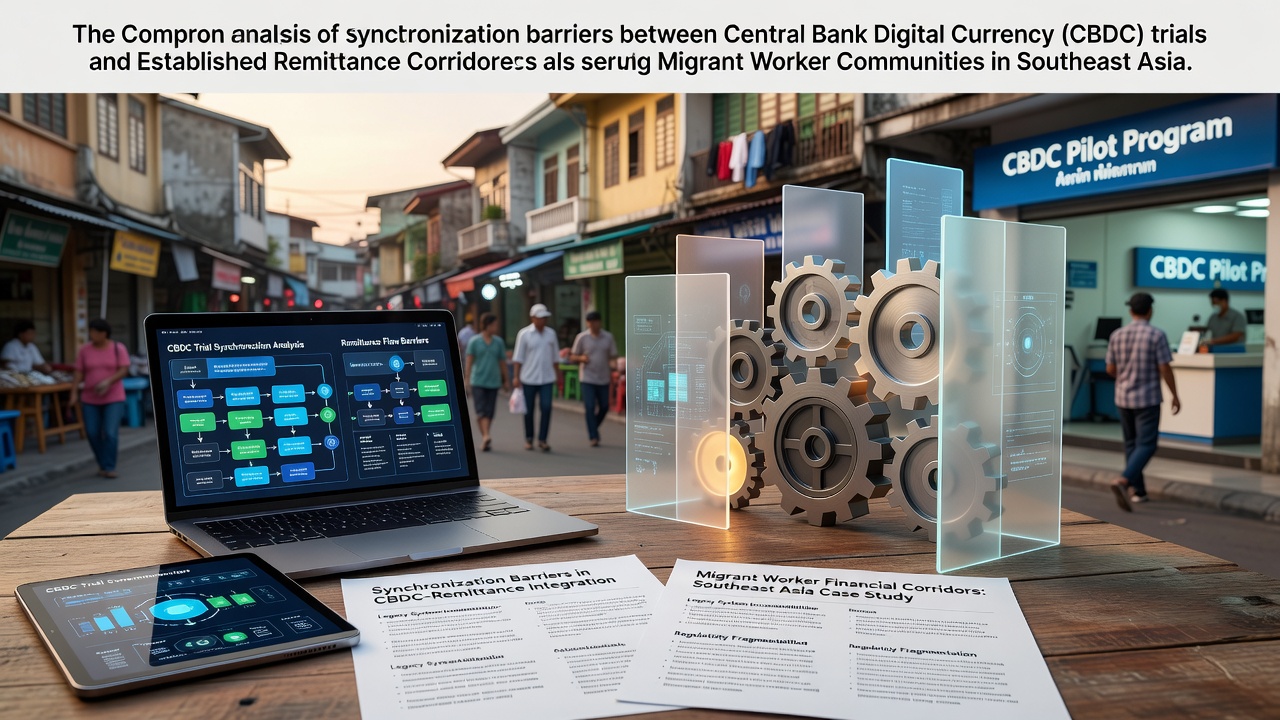
Analyzing Synchronization Barriers Between Central Bank Digital Currency Trials and Established Remittance Corridors Serving Migrant Worker Communities in Southeast Asia
Central bank digital currency trials across Southeast Asia have progressed through multiple phases since 2022, with pilot programs in Thailand, Singapore, Indonesia, and the Philippines testing wholesale and retail models that aim to support cross-border payments. These initiatives intersect with long-established remittance corridors that handle billions of dollars annually for migrant workers from Indonesia, the Philippines, and Vietnam who send funds home from construction sites, factories, and service roles in Malaysia, Singapore, and Gulf states. Observers note persistent synchronization barriers that arise when new digital ledgers attempt to interface with legacy settlement rails used by money transfer operators and correspondent banks.
Current State of CBDC Trials in the Region
Thailand's Project Inthanon-LionRock has expanded into a multi-currency platform involving the Bank of Thailand and the Hong Kong Monetary Authority, while Singapore's Project Ubin reached its fifth phase by mid-2025 and now incorporates atomic settlement features for tokenized assets. Indonesia launched a retail CBDC sandbox in early 2026 that connects selected commercial banks with the central bank's distributed ledger, and the Bangko Sentral ng Pilipinas announced additional testing rounds scheduled to conclude in September 2026. Data from these programs show settlement times reduced to seconds for domestic transactions, yet cross-border flows still encounter delays when they must reconcile with existing remittance networks that process through SWIFT messages and batch clearing systems.
Established Remittance Corridors and Their Infrastructure
Remittance corridors serving Southeast Asian migrant communities rely on a combination of bank-led channels, non-bank money transfer operators, and mobile wallet partnerships that together moved over 85 billion dollars in 2025 according to figures released by the Asian Development Bank. Corridors such as the Philippines-to-Singapore route and the Indonesia-to-Malaysia pathway process high volumes of small-value transfers, often below 500 dollars, with fees averaging 4.8 percent. These systems depend on pre-funded accounts at correspondent banks, nightly reconciliation cycles, and compliance checks that verify sender identities against know-your-customer databases maintained by multiple jurisdictions. Integration points remain concentrated around traditional messaging standards rather than real-time ledger updates.
Technical and Regulatory Synchronization Barriers
Technical mismatches surface when CBDC platforms require atomic delivery-versus-payment mechanics that legacy remittance processors cannot match without middleware layers. For instance, a Thai CBDC transfer initiated during a pilot may clear instantly on the central bank ledger, yet the receiving corridor in the Philippines still routes through an intermediary that settles only after compliance screening completes. Regulatory differences compound the issue, as CBDC pilots operate under central bank sandboxes with temporary exemptions, whereas remittance operators must adhere to full anti-money-laundering rules enforced by bodies such as Bank Negara Malaysia and the Monetary Authority of Singapore. Those who've studied the pilots point out that varying data standards for transaction metadata create additional reconciliation overhead when amounts cross from digital currency wallets into fiat accounts held at commercial banks.
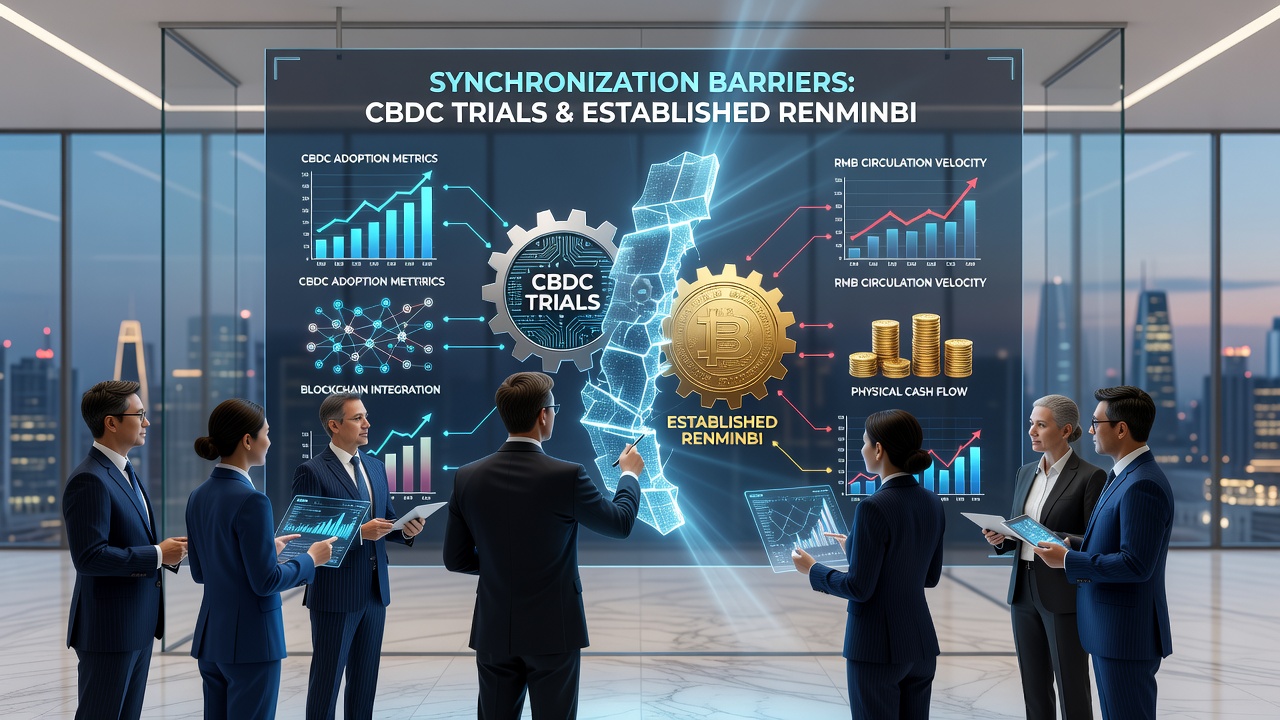
Adoption Patterns Among Migrant Workers
Migrant worker communities have shown uneven uptake of CBDC-enabled channels even when available. Surveys conducted by regional research institutes reveal that many senders prefer established mobile wallet apps because they already maintain balances in those interfaces and trust the fee structures displayed upfront. In corridors where CBDC options require opening new accounts or learning separate interfaces, participation rates remain below 12 percent as of the second quarter of 2026. Workers who split transfers across multiple recipients in rural areas also encounter limits on wallet functionality that traditional operators accommodate through cash pickup points. These patterns indicate that synchronization efforts must address not only ledger compatibility but also user experience continuity across payment rails.
Case Examples from Key Corridors
One corridor linking Indonesian workers in Malaysia to families in East Java illustrates the friction points clearly. A pilot CBDC transfer from a Malaysian employer account to an Indonesian wallet cleared on the originating ledger within seconds, yet the final payout required conversion through a licensed remittance agent whose system updated only after receiving a separate confirmation file. Similar delays appeared in the Philippines-Singapore corridor during a joint test in March 2026, where settlement finality on the CBDC side outpaced the compliance verification step on the receiving end by nearly 18 hours. Researchers at institutions tracking these flows have documented that such timing gaps increase operational costs for smaller transfer operators who must maintain higher float balances to cover the interim period.
Outlook for Alignment Efforts
Regional coordination bodies have begun mapping potential bridges between CBDC platforms and remittance infrastructure, including standardized APIs for identity verification and shared settlement windows. Discussions at the 2026 ASEAN Finance Ministers Meeting highlighted the need for common technical specifications that would allow remittance processors to query CBDC ledgers without duplicating compliance checks. Progress remains incremental, with most initiatives still confined to bilateral pilots rather than multilateral frameworks. Data compiled through mid-2026 show that corridors incorporating hybrid models, where CBDC handles the wholesale leg and traditional rails manage retail distribution, achieve faster reconciliation than those attempting full end-to-end replacement.
Conclusion
Synchronization between central bank digital currency trials and established remittance corridors in Southeast Asia continues to hinge on resolving technical interoperability, regulatory alignment, and user adoption frictions. As pilot programs advance toward September 2026 milestones, the focus shifts toward practical integration layers that preserve the speed advantages of digital ledgers while respecting the compliance and distribution strengths of existing networks. Evidence from ongoing tests indicates that incremental bridging strategies rather than wholesale substitution offer the clearest path forward for serving migrant worker communities efficiently.