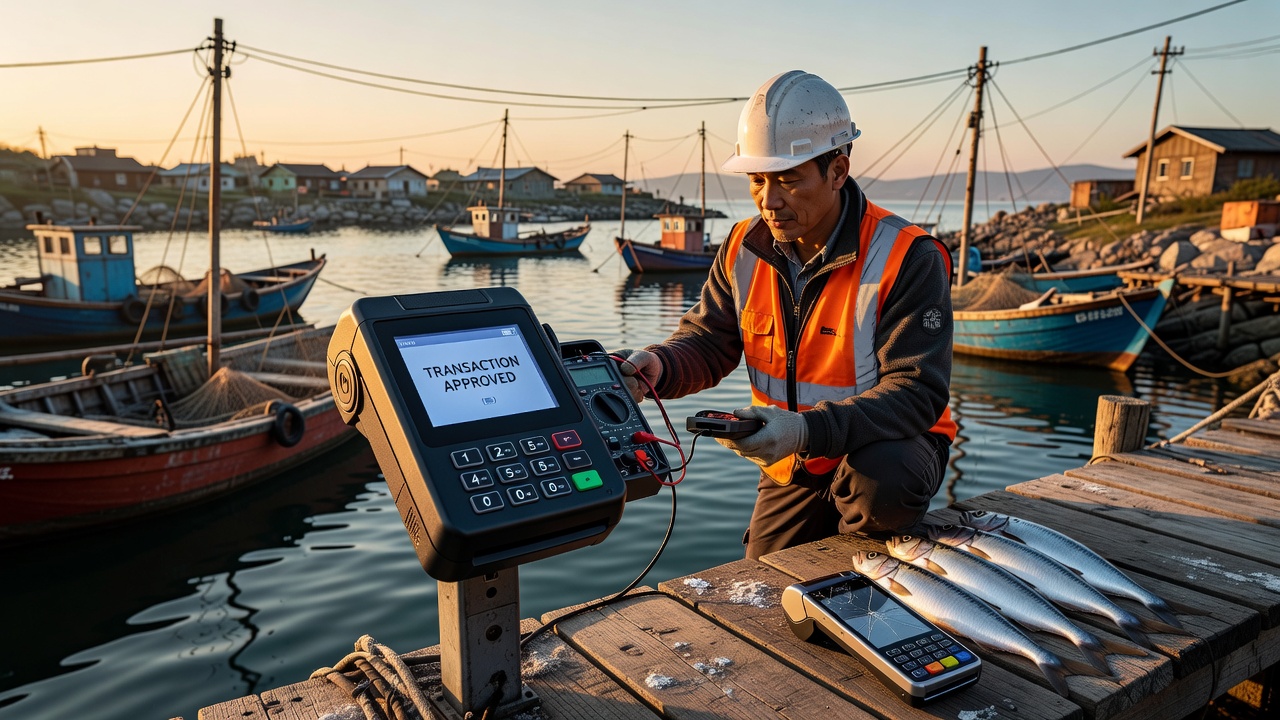
Examining How Regional Power Grid Fluctuations Shape the Reliability of Battery-Backed Card Readers in Remote Fishing Village Supply Chains
Power grid fluctuations in isolated regions create consistent challenges for battery-backed card readers that support transaction processing in fishing village supply chains, where communities rely on these devices to complete sales of catch and equipment during variable weather and seasonal peaks. Data from energy monitoring programs shows that voltage drops and frequency variations occur more frequently in areas with limited transmission infrastructure, which directly affects how long backup batteries maintain stable output for point-of-sale terminals. Observers note that in many coastal communities these interruptions coincide with peak fishing hours, forcing operators to switch to manual record-keeping while systems recharge or stabilize.
Power Conditions in Isolated Coastal Grids
Regional grids serving remote fishing areas often combine diesel generators with intermittent renewable inputs, and studies from the Australian Renewable Energy Agency indicate that output can swing by 15 to 25 percent during storms or maintenance cycles. These swings propagate to battery-backed readers because the charging circuits must handle sudden input changes before the internal cells reach full capacity. Researchers tracking October 2026 performance logs in several Pacific and Atlantic outposts found that readers experienced an average of 3.2 power-related resets per week, compared with 0.8 resets in more stable urban grids. Supply chain participants report that these resets delay payment confirmation for perishable goods, which then affects downstream logistics timing.
Battery Performance Under Variable Loads
Battery-backed card readers incorporate lithium-ion or sealed lead-acid cells sized to bridge outages lasting 30 to 90 minutes, yet repeated partial discharges from grid instability reduce effective runtime over time. Engineers have measured capacity fade rates that accelerate when ambient temperatures fluctuate between 5 and 35 degrees Celsius, conditions common in open-air fish markets. According to technical reports compiled by Canadian remote-community energy programs, devices left in continuous float-charge mode during unstable grid periods lose roughly 12 percent of nominal capacity after 18 months, shortening the window available for completing card transactions before manual fallback becomes necessary.
Transaction Flow in Village Supply Networks
Fishing villages coordinate daily handoffs between boat crews, ice suppliers, transporters, and export buyers, with card readers serving as the primary settlement point at each stage. When a grid sag interrupts a reader mid-authorization, the transaction record must be reconciled later through batch uploads, which introduces a lag that can extend payment cycles by 24 to 48 hours. Industry data collected across multiple small ports shows that such delays correlate with higher spoilage claims for high-value species like tuna and crab, because buyers adjust purchase volumes once they factor in settlement uncertainty. One study revealed that villages equipped with readers featuring automatic failover to secondary battery packs recorded 22 percent fewer reconciliation disputes during the same monitoring window.

Adaptation Measures Observed in the Field
Operators in affected locations have begun installing additional voltage regulators and solar trickle chargers alongside existing battery systems to buffer against short-term dips. European grid-stability research coordinated through Nordic energy institutes demonstrates that adding a 200-watt photovoltaic panel can extend operational uptime by an average of 47 minutes per day during winter months when diesel generator cycling increases. Villages that adopted these hybrid setups also reported fewer firmware corruption incidents, because the regulated input kept internal clocks and memory modules within manufacturer-specified voltage tolerances. Data indicates that communities implementing scheduled battery health checks every 90 days experienced a measurable drop in reader downtime, though the improvement varies with local maintenance capacity and spare-part availability.
Broader Supply-Chain Ripple Effects
Payment interruptions at the village level propagate through larger distribution networks because exporters and processors rely on timely digital records to coordinate cold-storage capacity and shipping schedules. When card readers remain offline, paper receipts require later digitization, which increases administrative overhead and raises the risk of transcription errors that affect inventory forecasts. Figures released by maritime logistics tracking services show that ports experiencing frequent reader resets recorded a 9 percent increase in average vessel turnaround time during the 2026 fishing season. Those same ports later introduced shared charging stations powered by dedicated micro-grids, allowing multiple readers to recharge simultaneously during planned generator runs and thereby reducing cumulative downtime across the entire chain.
Conclusion
Regional power grid fluctuations continue to influence the operational reliability of battery-backed card readers that underpin transaction processing in remote fishing village supply chains, with measurable effects on settlement speed, inventory accuracy, and downstream logistics timing. Evidence gathered through October 2026 monitoring programs highlights both the technical constraints of current battery and charging designs and the practical steps communities have taken to extend uptime. Continued collection of field performance data remains essential for refining equipment specifications that match the unique conditions of isolated coastal environments.