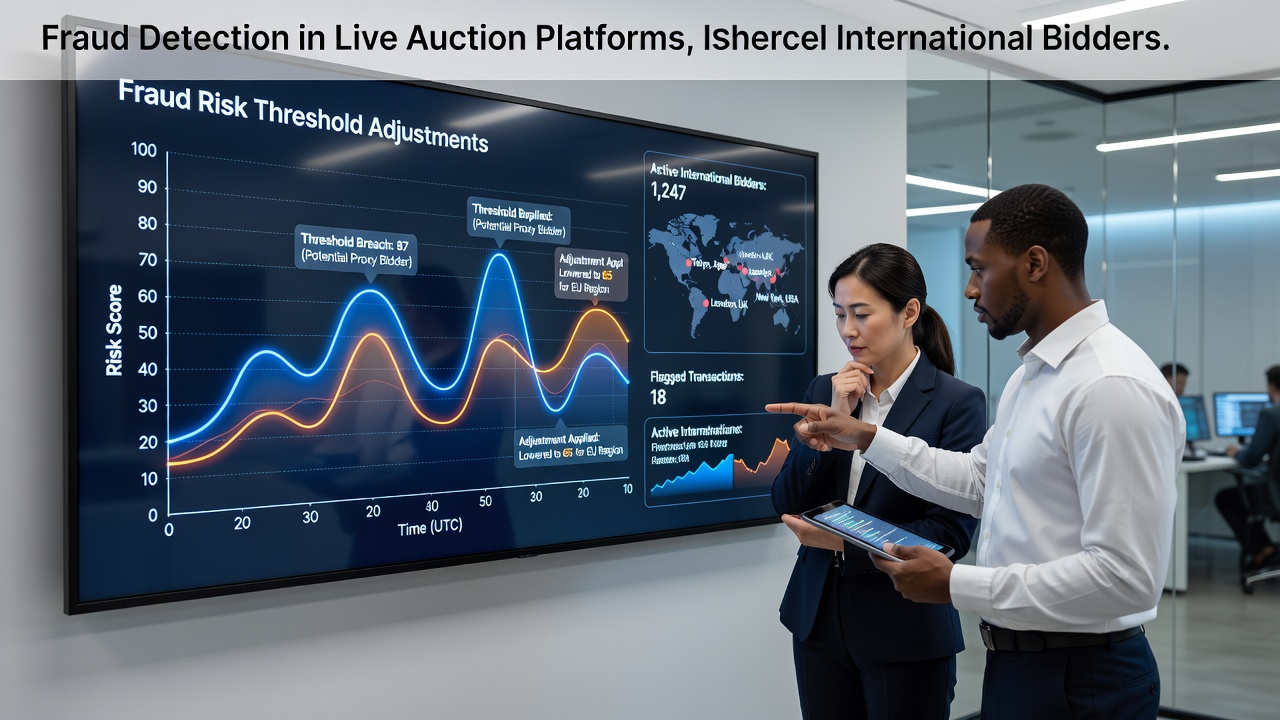
Examining Threshold Adjustments in Fraud Detection Systems for Live Auction Platforms Handling International Bidders
Live auction platforms that connect sellers with bidders across borders rely on fraud detection systems to monitor transactions in real time, and these systems adjust detection thresholds based on bidder location, transaction velocity, and payment method patterns. Threshold adjustments occur when algorithms recalibrate risk scores to account for variables such as currency fluctuations, regulatory differences, and historical bidding behavior from specific regions. Data from payment processors shows that platforms handling bidders from more than fifty countries experience a 30 percent higher volume of flagged transactions during peak bidding hours compared with domestic-only events.
Core Mechanisms Behind Threshold Calibration
Thresholds in fraud detection operate through layered scoring models that assign numerical values to each bid attempt, and adjustments happen dynamically when incoming data streams indicate deviations from established baselines. Researchers at institutions tracking e-commerce security note that machine learning components update these baselines every few minutes during live events to reflect current traffic loads. One platform operator documented a shift in the minimum risk score required for auto-approval after observing repeated chargeback patterns originating from certain Southeast Asian IP ranges in late 2025. The process combines static rules with adaptive elements so that a bid placed in euros from a new device receives different scrutiny than one placed in USD from a previously verified account.
Handling Variables Introduced by International Bidders
International bidders introduce complexities including varying time zones, multiple currency conversions, and differing know-your-customer requirements across jurisdictions, all of which prompt systems to modify detection sensitivity. Platforms integrate geolocation signals with device fingerprinting to determine whether a bidder's claimed location matches the origin of the payment instrument. Figures released by the European Central Bank in its 2025 oversight report on card-not-present transactions indicate that cross-border auction payments carry an average fraud rate 2.4 times higher than same-country activity. Systems therefore raise thresholds for high-velocity bidding sessions involving rapid currency switches, while lowering them for accounts that have completed additional verification steps such as video identity checks.
Operational Adjustments During High-Volume Periods
During intense bidding windows, platforms increase the frequency of threshold reviews to prevent both false positives that block legitimate buyers and false negatives that allow fraudulent activity. Observers note that teams monitoring these systems often correlate spike data with external events such as regional banking holidays or major currency movements. A case involving a European art auction house revealed that after three consecutive sessions with elevated disputes from bidders using virtual private networks, the platform implemented a secondary scoring layer that required manual review for any bid exceeding a preset amount from masked IP addresses. Such changes reduced disputed transactions by 18 percent over the following quarter according to internal metrics shared with industry analysts.

Regulatory and Data Influences on System Updates
Regulatory frameworks in different regions require platforms to maintain audit trails of threshold changes, and compliance teams review these logs during periodic examinations. The Federal Trade Commission maintains public guidance on electronic payment safeguards that encourages documented calibration procedures for systems handling cross-border flows. Academic papers examining auction marketplaces have tracked how platforms incorporated new signals such as mobile network metadata and behavioral biometrics following updates to payment services directives in the European Union. Platforms that serve bidders from Australia and Canada often align their scoring models with local consumer protection standards, resulting in region-specific threshold bands that activate automatically based on the bidder's registered address.
October 2026 System Enhancements
Industry reports indicate that several major live auction operators rolled out enhanced calibration modules in October 2026, incorporating real-time feedback from settlement partners to refine risk weights for emerging payment instruments. These modules allow platforms to test threshold variations in controlled environments before full deployment across all bidding channels. Analysts tracking adoption rates found that operators using the updated tools recorded faster resolution times for flagged bids while maintaining consistent authorization rates across time zones. The changes also addressed latency issues that previously affected bidders connecting through mobile networks in regions with variable connectivity.
Conclusion
Threshold adjustments remain a central component of fraud management on live auction platforms serving international bidders, driven by continuous data inputs and regulatory expectations. Platforms that maintain flexible scoring frameworks demonstrate measurable reductions in both fraud losses and unnecessary transaction blocks. Continued coordination between technology providers, financial institutions, and oversight bodies supports further refinements to these systems as bidding patterns evolve.