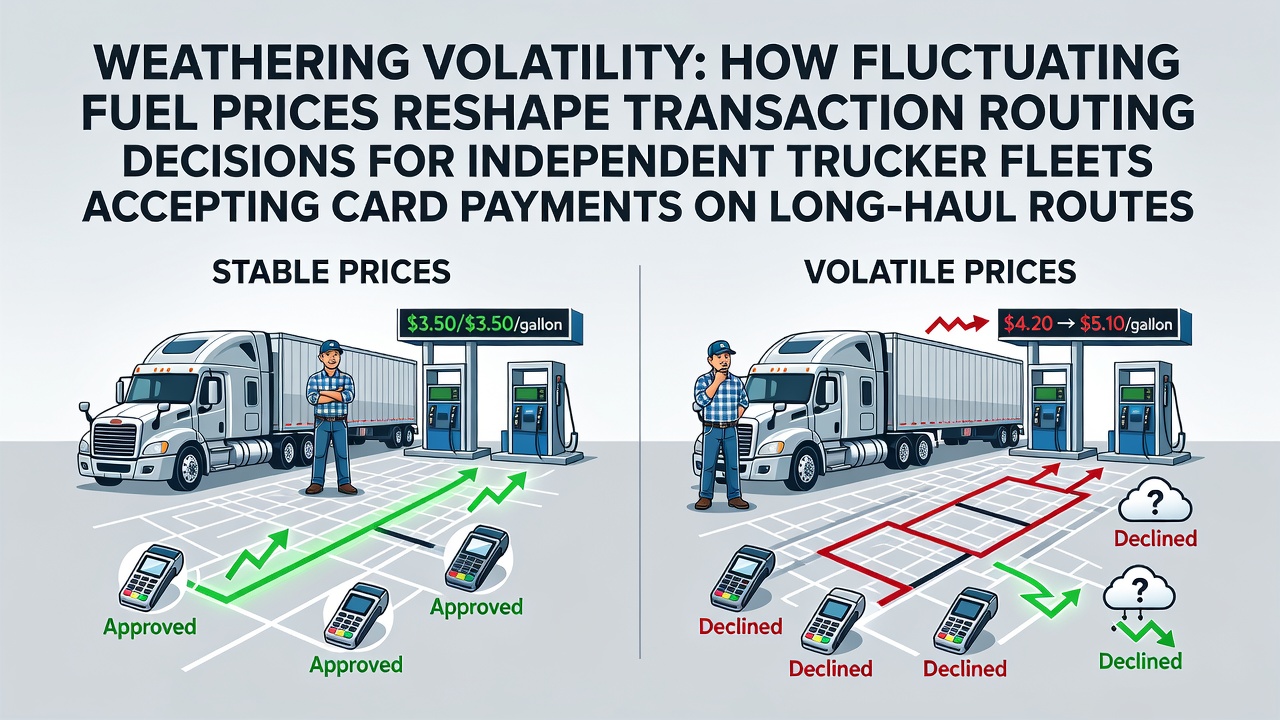
Weathering Volatility: How Fluctuating Fuel Prices Reshape Transaction Routing Decisions for Independent Trucker Fleets Accepting Card Payments on Long-Haul Routes
Data from the U.S. Energy Information Administration shows diesel prices swung between $3.20 and $5.80 per gallon from early 2025 through October 2026, creating direct pressure on independent trucker fleets that accept card payments while operating long-haul routes across North America. These operators face a dual challenge: fuel costs consume 35 to 45 percent of revenue on typical cross-country hauls, while card processing fees on freight invoices add another layer of expense that varies with each transaction routing choice. Fleet managers respond by adjusting which payment processor or network they select for each load, a practice known as transaction routing, to offset the impact of those fuel swings.
Fuel Price Patterns and Their Reach into Payment Operations
Independent fleets operating 2026 routes from the Pacific Northwest to the Southeast report that a 40-cent rise in diesel over a two-week period can erase the margin gained from routing a single invoice through a lower-fee network. Observers note that many owner-operators now monitor weekly EIA spot prices alongside their payment processor dashboards, then shift routing logic when fuel crosses certain thresholds. One study released by the American Transportation Research Institute in September 2026 found that 62 percent of surveyed independent fleets had updated their transaction routing parameters at least four times during the preceding twelve months, directly linking those changes to fuel volatility rather than to fraud or authorization rates.
Mechanics of Transaction Routing Under Cost Pressure
Transaction routing decisions involve selecting among multiple acquiring banks, card networks, or gateway partners for each card-present or card-not-present freight payment. When fuel prices climb, fleets prioritize routes that deliver the lowest per-transaction cost even if settlement takes an extra day; when prices ease, the same operators often switch to faster-settlement options that carry slightly higher fees but improve cash flow for the next fuel purchase. Researchers at the University of Memphis Supply Chain Management program documented this pattern in a 2026 analysis of 1,200 owner-operator invoices, noting that average effective discount rates dropped 0.18 percentage points on high-fuel weeks when fleets deliberately selected least-cost routing paths.
Regional Differences in Routing Adjustments
Fleets based in the Midwest, where diesel price swings tend to lag coastal markets by several days, often pre-emptively lock in lower-cost processors before prices rise locally. In contrast, operators running the I-80 corridor between Chicago and Sacramento report reacting within 48 hours of a price spike, sometimes mid-route, by switching the default routing rule on their mobile terminals. Canadian fleets crossing the U.S. border add another variable: currency conversion fees layered on top of card network costs become more noticeable when fuel already accounts for a larger share of operating expense, prompting some to route CAD-denominated invoices through domestic acquirers even when U.S. networks advertise marginally lower base rates.
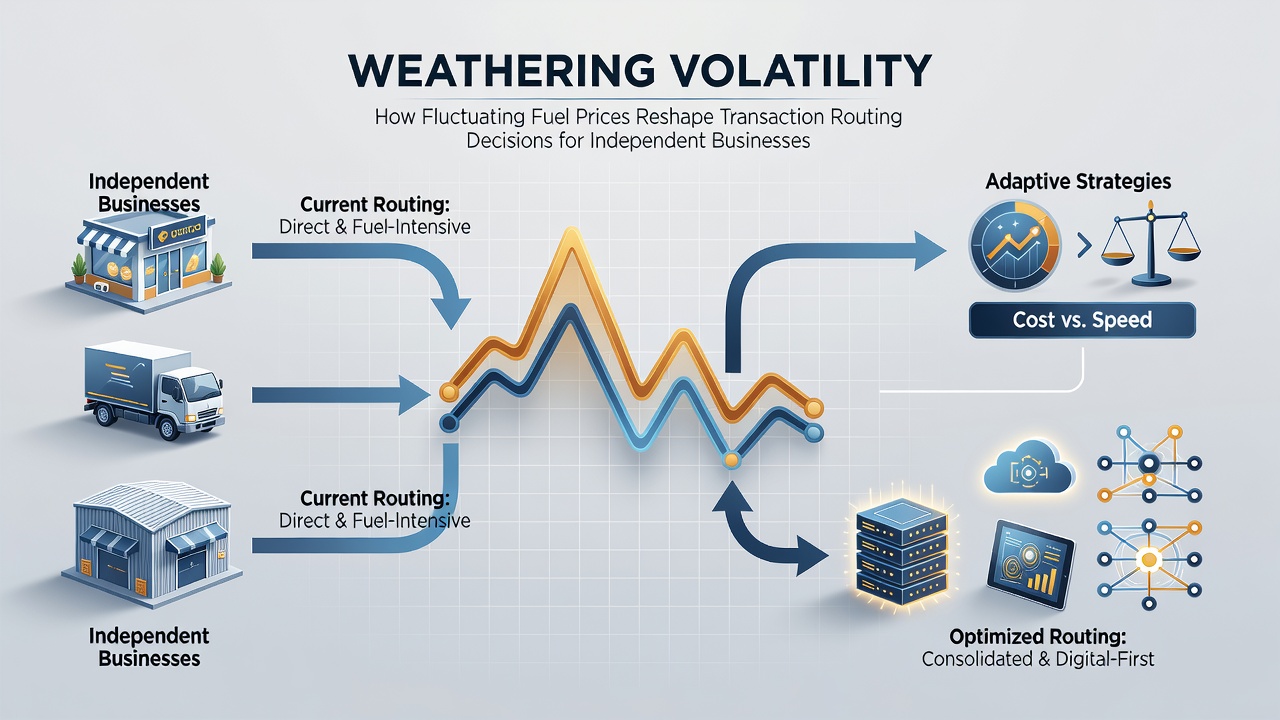
Technology Tools Enabling Rapid Routing Shifts
Payment orchestration platforms tailored to trucking now integrate live fuel-price feeds from government and private sources, allowing fleets to set automated rules that trigger routing changes when diesel exceeds a preset level. One such system deployed by a 180-truck independent carrier in Texas during summer 2026 reduced average processing costs by 11 percent across 14,000 invoices while fuel prices remained elevated. The same platform logs each routing decision and its associated fee, giving fleet accountants the data needed to reconcile payment expenses against fuel receipts at month-end.
Settlement Timing and Cash-Flow Linkages
Longer settlement windows that accompany some low-cost routing choices create a timing mismatch with fuel purchases that must be made daily. Fleets address this by maintaining revolving credit lines sized to cover two weeks of fuel at peak prices, then routing a portion of invoices through faster networks when cash reserves dip below a safety threshold. Data compiled by the Owner-Operator Independent Drivers Association in October 2026 indicates that members using hybrid routing strategies maintained average fuel-purchase liquidity 19 percent higher than those locked into single-network arrangements during periods of rapid price movement.
Regulatory and Network Considerations
Interchange rules set by card networks remain stable even as fuel prices fluctuate, yet some acquirers offer temporary routing incentives tied to overall transaction volume when diesel markets turn volatile. Fleets that aggregate payments through a single orchestration layer can qualify for these incentives more easily than those managing individual processor relationships. European operators following similar patterns under EU payment regulations have begun sharing routing-performance benchmarks through industry forums, though North American fleets continue to rely primarily on domestic data sources for their decisions.
Conclusion
Independent trucker fleets accepting card payments on long-haul routes continue to treat transaction routing as a controllable variable that directly offsets fuel-price volatility. By linking real-time diesel data to processor selection rules, these operators adjust costs on a load-by-load basis without altering routes or load volumes. Ongoing integration of fuel-price feeds into payment systems suggests this practice will expand as price swings persist through late 2026 and beyond.